A Fragmentary Restoration of a Weary Writer
Amidst a recent period of inactivity, where I felt frozen in time and unable to focus enough to write on much at all, I had a thought of retrieving any bit or piece of my early work that would spark motivation – although the culprit wasn’t lack of motivation, more a stagnation or overwhelm as a response to our chaotic and fast-changing world. Sometimes it stops us in our tracks, and we need to find the recalibrate button.
I wondered if writing my way back through fragments of past work would help, in much the same way I have written on fragments of historical literature to uncover hidden messages or meanings.
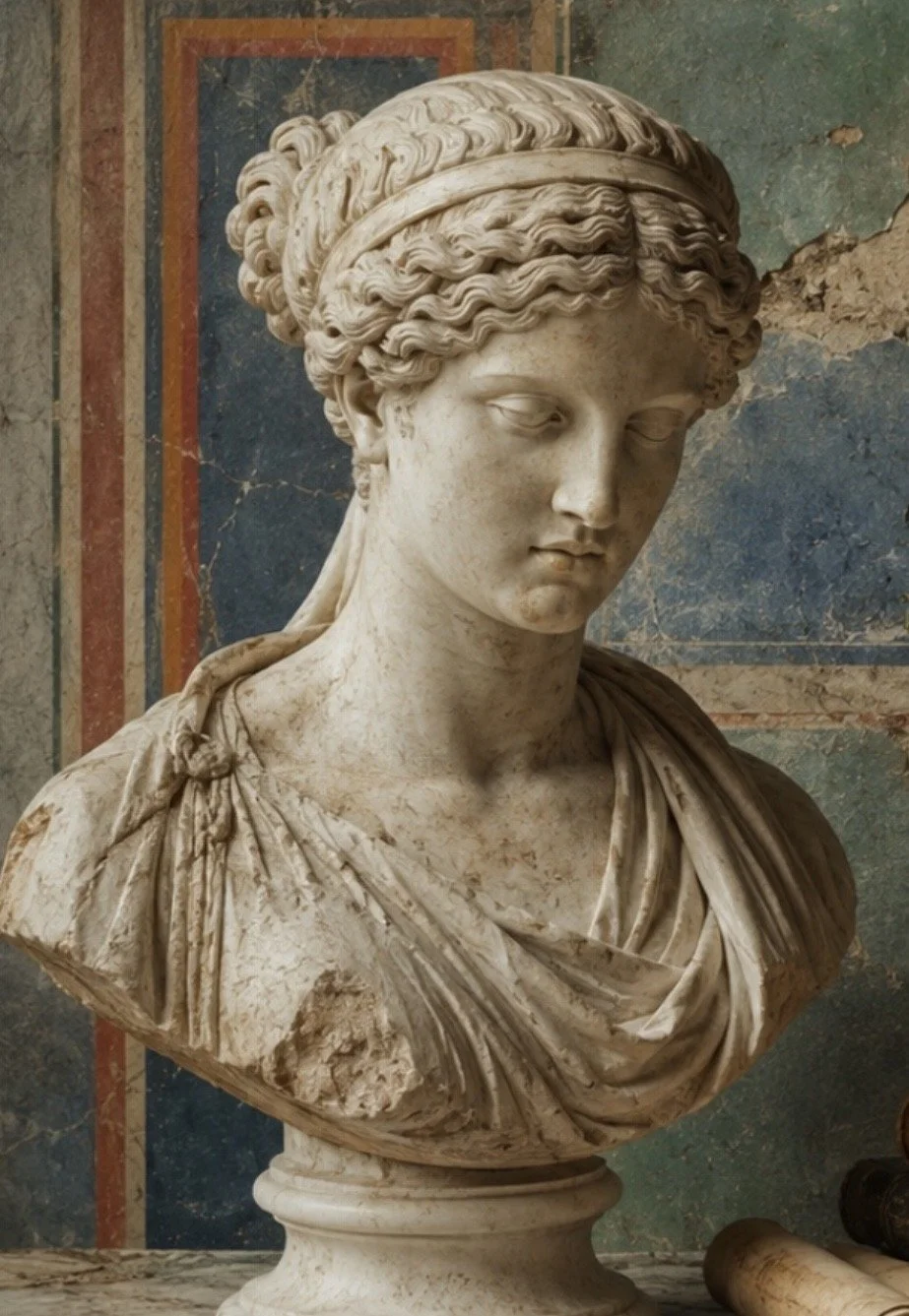
The weary figure in search of the flame to reignite the spark of creativity. Author’s own AI generated image.
Quietly and patiently, I pieced together the steps that led to my writing life, and ultimately to the construction of my website, Letters From Time.
fr. 1
I created a Substack account and wrote about Ancient Rome. Initially, it focused on areas I had learned during the course of my formal study, until it evolved into a world of parallels with our own.
fr. 2
I expanded into writing about literature, revisiting the classics of the Renaissance and early modern eras.
fr. 3
My intrigue for the idea of traveling through time ignited a hunger to dive more into historical letters and correspondence, so I changed the Substack account to capture the varied interests.
fr. 4
I built a website to store all the work as in a vault — a repository for my entire corpus, divided into four distinct chambers of Antiquity, Literature, Commonplace, and Politics.
fr. 5
I added to it gradually with a section dedicated to short fictional stories and poetry.
fr. 6
Then emerged a Gallery of Remembrance – Meminisse – comprised solely of images, some etched with memorable quotes.
fr. 7
The last section birthed the fragmentary focus – Fragments of Time.
It was in here where the spark lit the flame enough for me to begin to write my way back out of the malaise.
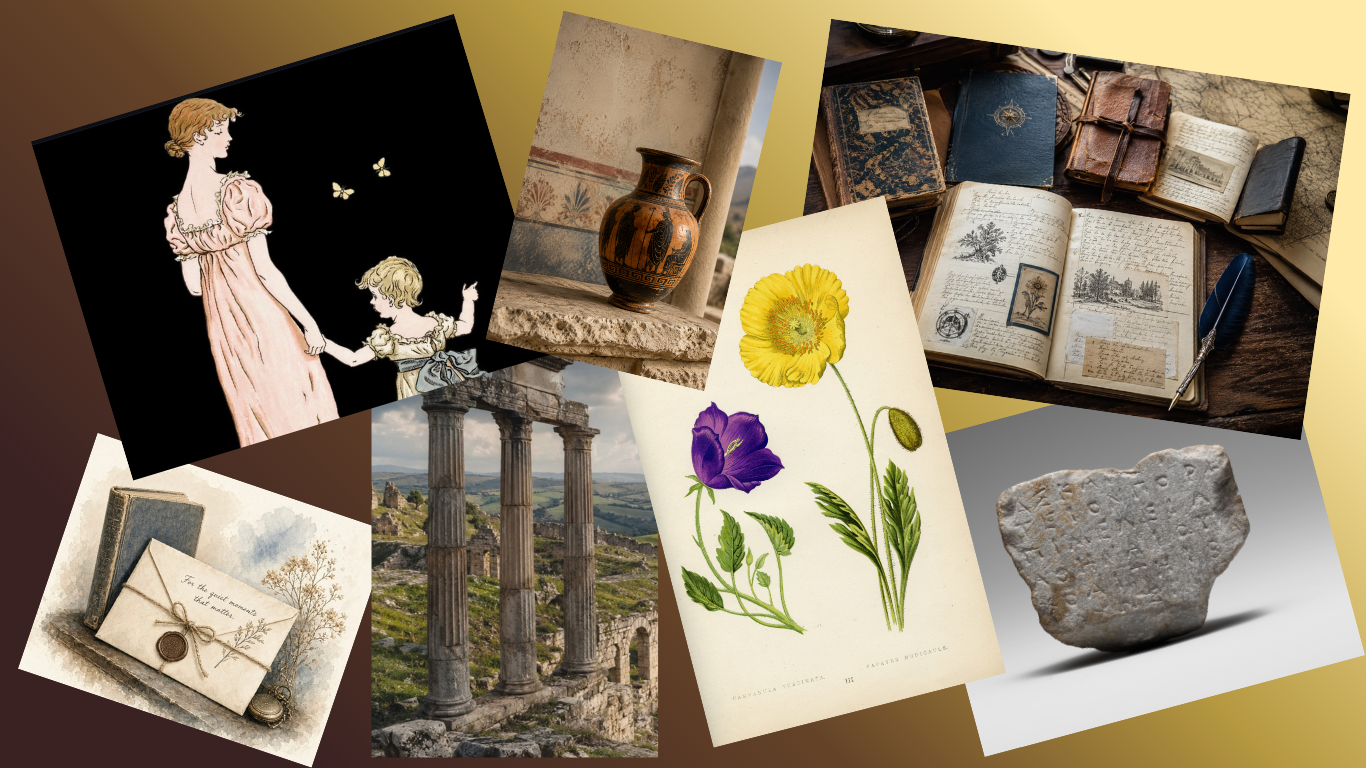
The fragmentary pieces that can help rebuild to the whole. Author’s own compilation of images.
We must not underestimate the important role fragments play in memory and discovery. History books, particularly from antiquity, often contain a portion of fragmentary evidence without which we would have no clue at all about the wider topic they are attached to, and that can sometimes be discovered via other important or better-known works.
Those broken or shattered pieces, known as fragmentary, provide a repository from which we can discover forgotten times and places.
I view it a bit like standing on the shoulders of giants – we may not be able to see the complete picture, but we can catch a glimpse from the elevated heights of knowledge left behind. From there, we can begin to form our own idea of how things were from the perspective of posterity.