From BC Letters to AD Social Media
I think that Cicero would have loved social media.
The ancient Romans were prolific letter writers, none moreso than Marcus Tullius Cicero. His approximately 900 extant letters to various friends and colleagues have provided us with valuable insight into life in the late Roman Republic.
While much of the correspondence is dominated by political matters, we are permitted a glimpse into his more intimate personal life and the things that concerned him in the same way that they concern us today.
Sometimes he would write several letters a day, and was often impatient should a reply not be forthcoming soon after dispatch by a messenger. He often admonished his friend, Atticus, for not writing more, in one letter stating:
‘Send me a letter as soon as you can. If no news, just say that, that there is nothing doing, even if it means sending a courier of your own.’
If not admonishing, he resorted to begging:
‘But I do beg you to write as often as you can, anything you know or hear or even just suspect.’
He often insisted that he would write even if he had nothing to say, and in one letter, expressed such delight in receiving a letter so quickly from Atticus, writing that his friend’s “promptitude” was more agreeable to him than what he even had to tell!
We see the intensity of his longing for connectivity in the opening line of a letter written to Atticus on 22 May 45 BC:
‘Although I have nothing to write to you, I write all the same because I feel that I am talking to you.’
Grant it, this was penned three months after the death of his daughter, Tullia, so his grief was still raw. But within those last few words is the key to understanding the depth of his, and other Romans, to connection - no different than our own today, nor of any period of history. We use social media to also feel that we are talking to others, and that our thoughts are being heard.
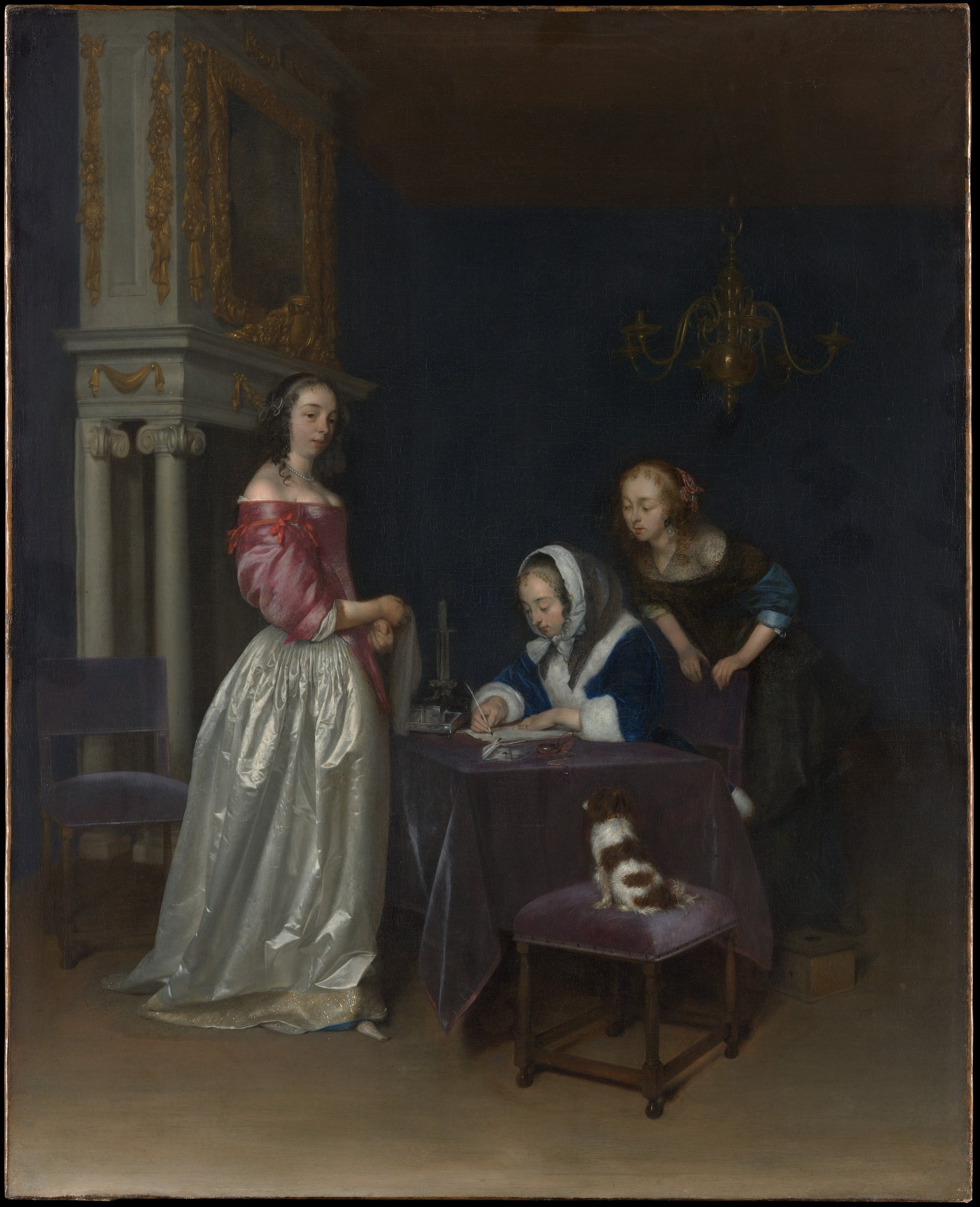
Curiosity: Gerard ter Borch the Younger (Dutch, Zwolle 1617–1681 Deventer), 1660-62. Image courtesy of the MET.
This image captures the essence of writing out of curiosity and a need to share our thoughts, no matter what era we live in.
Just because social media as we know it wasn’t around in Cicero’s day, we can’t be fooled into thinking that they were not also subject to “shadow banning.” Cicero’s letters often refer to the dangers involved in having his messages read or even being delivered for fear of retribution, particularly during the heightened times of civil war when the power struggles between Caesar and Pompey were being played out. In a letter to his friend, Cassius, he writes that his return letter would be much longer if it were not for the haste at hand in dispatching it:
‘…longer, anyhow, if I had had any bavardage to hand, since writing au sérieux is hardly possible without risk. Is joking possible then, you will ask. Well, it certainly isn’t very easy, but we have no other means of diversion from our troubles.’
There we have it: he has no “bavardage” - chatter; and since writing anything “serious” only leads to the threat of persecution, he makes light of the real risk involved during such times of surveillance under fire. Oh, how eerily familiar!
Sure, advancements in technology have changed many things from Cicero’s day to our own, but not everything. No, some things are unchangeable. And that is what makes our connection to the past so fascinating and frustrating at the same time: fascinating in the sense that we see ourselves in our ancestors, and frustrating that we appear to have found no way to change things despite having the knowledge at hand to do so.
These translations are taken from the Loeb Classical Library editions of Letters to Friends and Letters to Atticus, translations by D.R. Shackelton Bailey.