Story Time and Botanicals
It is time to write about some natural beauty. The world is shedding enough darkness of late, so it will be a good shift for our senses.
I’m not up to date with the children’s reading catalogue of today, but when I was a child, picture books were aplenty. The colours were bright and varied. The characterisations were evocative, mysterious, and wonderful. The Classics like Peter Rabbit by Beatrix Potter; The Magic Pudding by Norman Lindsay; Snugglepot and Cuddlepie by May Gibbs; Blinky Bill by Dorothy Wall; The Silver Brumby Series by Elyne Mitchell; The Famous Five by Enid Blyton are just a sampling.
I also remember the very picturesque Rhyme Books that overflowed with evocatively brilliant images of people, pets and botanicals. One Rhyme in particular stands out as I write:
Jack be nimble, Jack be quick, Jack jump over the candlestick. (Part of what is known as the Mother Goose stock of children’s nursery rhymes).
The other one I remember chanting on repeat as a young one, is the story of Mary and her little lamb, by Sarah Josepha Hale, 1830:
Mary had a little lamb,
Its fleece was white as snow;
And everywhere that Mary went that lamb was sure to go.
It followed her to school one day,
That was against the rule;
It made the children laugh and play to see a lamb at school.
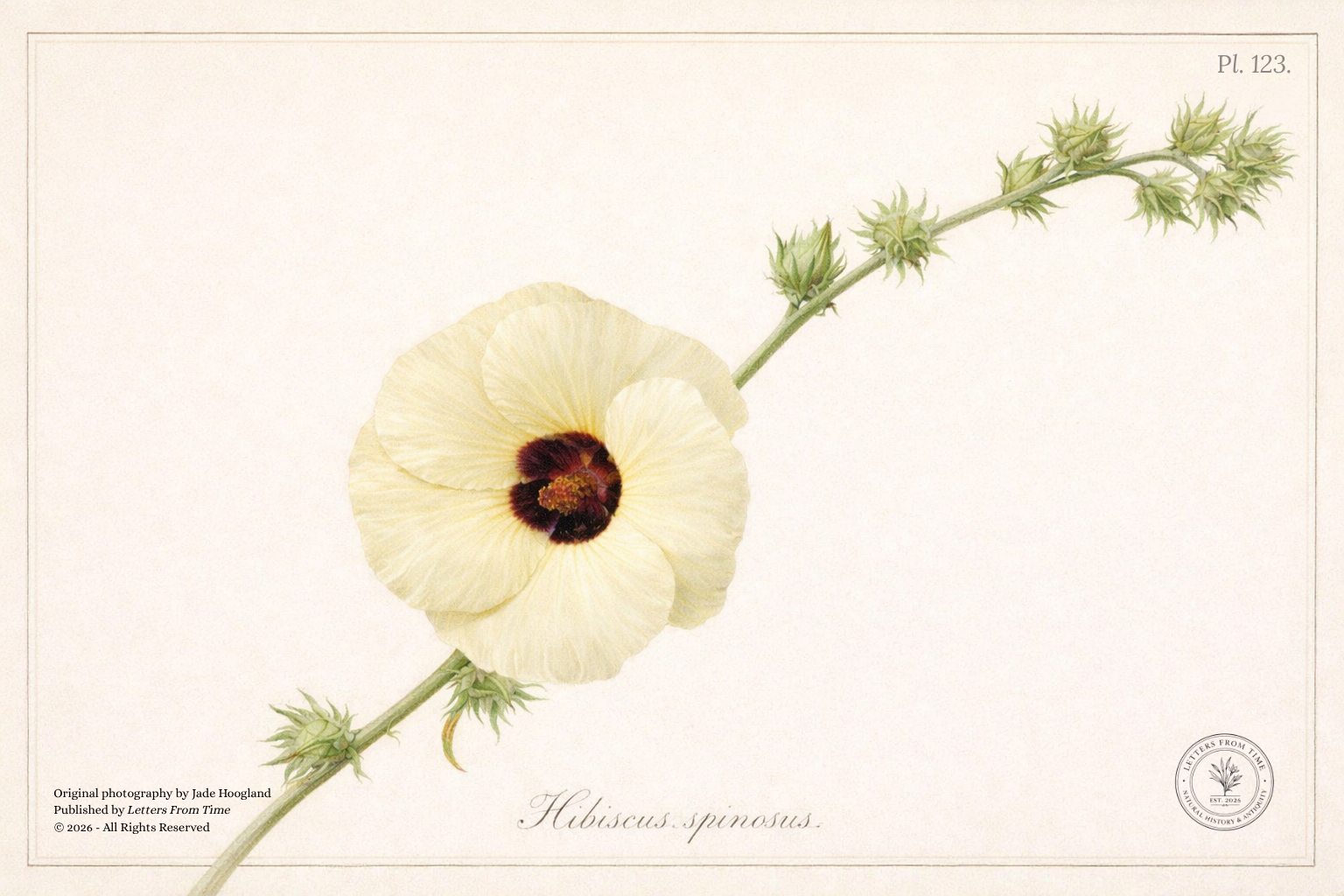
A recreated image from an original photo by my daughter, to reflect the botanical sketching style of the nineteenth century.
Then there are the botanicals — Flower Children by Elizabeth Gordon; and Flower Fairies by Cecily Mary Barker. A most beautiful analogy is found in the Forward of Gordon’s book, Flower Children: The Little Cousins of the Field and Garden:
‘A flower is the mystical counterpart of a child. To the understanding heart a child is a flower and a flower is a child.’
The flower worlds of my childhood were not the foxgloves and bluebells that populated English picture books, but my Australian country upbringing presented beautiful Hibiscus and grand Hydrangeas, which were plentiful in my grandmother’s garden, and which I still remember vividly to this day.
As with a steadily growing resurgence of interest in history, particularly Ancient Rome, it would be comforting to know the same is happening with these old world, beautiful fairy tale and botanically-focused books in which children and adults alike can find solace and warmth from the craziness of the world outside. Graphic novel epics may tempt from the bright headlines of modernity, but flower fairies, garden children, and vintage botanicals wait patiently on the shelves. They do so because of their enduring appeal.
As the saying goes, Classics never die!