Epiphany
“If nothing we do matters, then all that matters is what we do.”
- TV Series, Angel, 2001: Epiphany
I have dwelt on this statement for a long while, trying to make sense of it but only ever coming up with what was an existential warning, which usually led to despair about our lives and the world in general.
The fact that these words found me via a twenty-first century supernatural detective series written in an episode entitled, Epiphany, is evidence that humans are in a constant state of flux, so any argument that our era is manifestly more enlightened than earlier ones, is a moot point.
Some of us – perhaps many – struggle to understand the meaning of life, and whether what we do has any impact on the world around us, or even if it is meant to at all.
I have come to interpret this statement as meaning the following:
We are born at a particular time, in a specific place, with unique skills each to our own. And all we can do is the best with them, where we are, within the time given to us.
Perhaps some readers are far ahead of me, and wonder why I even struggle with such a question. It is not that I do not realise this, but the true depth of it has alluded me. Read more than once, the meaning easily becomes garbled.
Modernity has bamboozled us.
In addition, those of us born in the last half a century were told in no uncertain terms that we needed to go out and “Change the world!” “Show our best sides!” “Make our voices heard!” As a parent of now grown adults, I will admit to repeating those mantras to my own children – in the beginning.
I did eventually wise up to the limitations of such grandiose ideas.
Living our best lives should not have to mean affecting change upon the entire world, for clearly that is not possible.
Our small acts of generosity, helpfulness, or advice dispatched may not matter in the grand scheme of things, but it matters to who benefits from them when they go on to replicate the same pattern.
Yes, I can turn to the ancient philosophers for their pearls of enduring wisdom. But sometimes their physical remoteness doesn’t fill the void – perhaps it’s that urgency that haunts we moderns in our hunt for immediate understanding, which we feel can only be achieved through present examples.
It was someone closer in time who I sought to help me address this perplexity of thought.
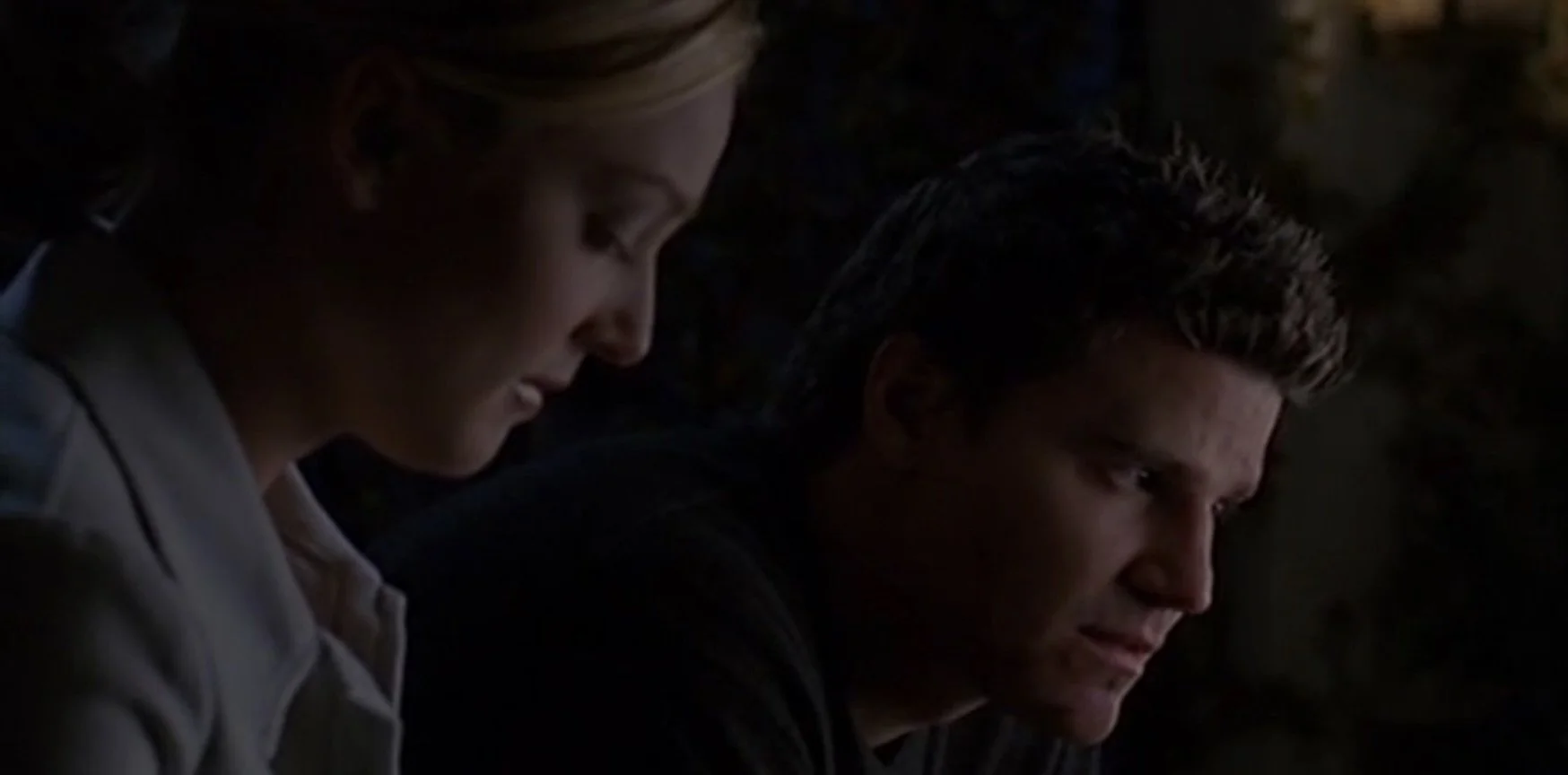
From the TV Series, Angel, 2001: Epiphany.
Is there a case for tragic optimism?
Viktor E. Frankl believed so and argued most eloquently for it in his seminal work, Man’s Search for Meaning, where he asked the question:
“How can life retain its potential meaning in spite of its tragic aspects?”
He wrote of the “tragic triad” of pain, guilt, and death, posing the dilemma we confront as humans to choose life in spite of what arises from those three challenging earthly experiences.
How indeed, I ask myself repeatedly.
I ponder it as I watch my mother die.
I wrestle with it watching my eldest daughter who is severely disabled and needs 24-hour care to live in this world.
I get the first one – we have no choice in the matter as we will all die.
The second is my constant struggle. Frankl’s words cut hard here – how do I choose the wonder of life when my daughter’s life is spent having to be cared for, because, despite my lifelong efforts to heal her, I could not give her a regular life that my other children enjoy.
The quote from a vampire-detective television drama became an epiphany for meaning to my own life, but my interpretation came from a thinker closer to home than a sage from antiquity. And what they both told me was that meaning is not handed to us by our circumstances or times we are born into, but what we create out of them.