Ignorance of politics is not bliss.
Political discussion at the dinner table has been an off-limits subject in the modern world, in stark contrast to that of the ancient, medieval and enlightenment eras, where everyday life was consumed by knowing who your friends and adversaries were and how their every move would affect your life.
This has been to our detriment, as contemporary world events are playing out in a chaotic and unpredictable way. Of course, this is not unusual at the height of any civilisational upheaval, but what makes this turning point or shift noticeably different is that we have at our disposal an obscene amount of information that can lead us in either the direction of success or failure.
The ancients did not. The medievalists had more, although not widely spread across the general population due to lack of literacy and strict class structures.
And if people don’t pay attention, and their civilisation collapses, it is not returning.
Ruins are all that will remain.
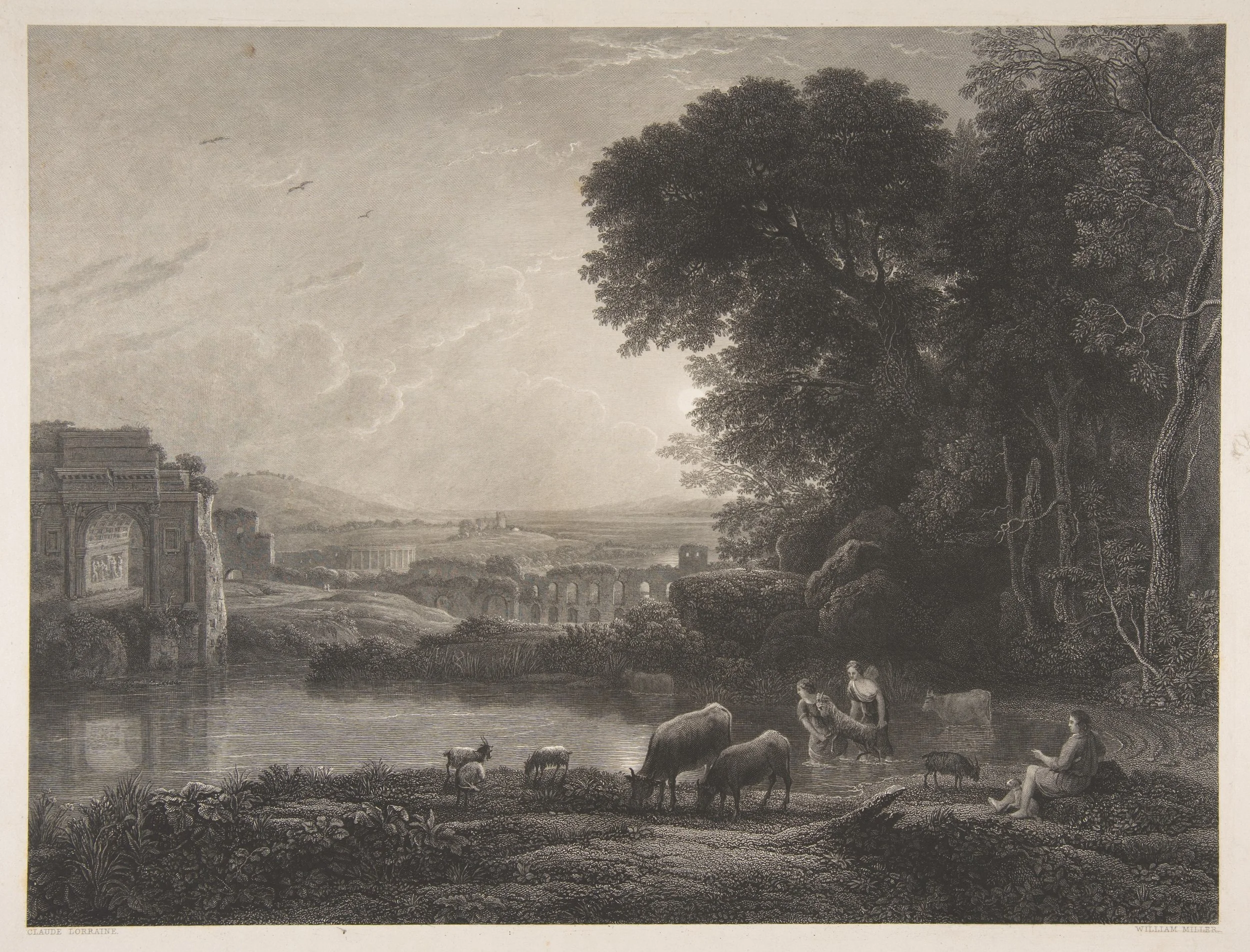
Landscape with Roman Ruins. Artists: William Miller (British, Edinburgh, Scotland 1796–1882 Sheffield). After Claude Lorrain (Claude Gellée) (French, Chamagne 1604/5–1682 Rome). Image courtesy of the MET.
A calling.
My interest in politics began in earnest when I began my Classics studies in 2005. I soon realised that the Roman Republic was inseparable from politics. We have inherited from Rome a blueprint on the design of what was considered back then as the most sophisticated of all constitutions - it contained the three levels of government which western liberal democracies operate under today.
As an aside, this system was not conceptualised singularly by the Romans - the earlier Spartan leader, Lycurgus, saw the merit in constructing his nation along these lines. In effect, he reasoned his way to this, and the Romans built upon it through learning the benefits and pitfalls. Which is why we often hear the criticism that the ancient Romans were not innovators, but merely great copiers. I don’t agree with that assumption as we just need to look at their engineering feats and tendency to beautify all that they envision. Among many other things. But that’s a piece for a later time.
The enemy is always inside the gates.
The Roman Republic ultimately fell due an insidious rotting from the inside, cementing its grip over the last two centuries. Historians will debate the timing, but I see this final period prior to the Fall as the beginning of the end. The three preceding centuries endured in no small part because of the Romans’ abiding commitment to tradition, what the Romans refer to as mos maiorum - respect of ancestral customs.
Western nations today are in turmoil in a similar way to all civilisational decline - through loss of knowing who they are, how they became the great nations they once were at their peak, and how they dealt with the fallout from becoming too great. It is not unlike the cycle of human life - we are born; we live and grow through good times and bad; we die.
The political cycle known as Anacyclosis explains this in great detail, and is a topic I will write on in more detail at a later date.
Pay attention to what politicians say and do.
This briefly explains my deep interest and calling to read and write about how politics is woven into history in a way none of us can ignore or escape from.
Every single decision a politician makes directly affects how we live our lives - for good or bad. Aristotle declared that humans are by nature, political animals, and that it is simply inherent in our nature to form groups and be part of organising ways to live together in some degree of harmony.
Over the coming months, I will write more articles focusing on the plethora of topics that bind us to the past in a way that, if more of us would dare to take notice, we would see patterns that repeat and which can help us avoid disasters - something that one of my favourite Roman historians, Titus Livius, wrote passionately about, and which I highlight on this site’s home page.
I am in favour of political discussion at the dinner table and all other tables. It doesn’t mean that every person has to join a party or run for office; it simply means paying attention and making your voice heard.
I was not always interested in politics, until politics became interested in me. It will ultimately become interested in you, too.