The Timeless Themes of Mythology
Mythology is often given a bad rap, dismissed as antiquated, meaningless and akin to believing that fairies live at the bottom of our gardens (maybe they do!)
Yet, it has served humanity since the beginning of time as a means to attempt to understand ourselves and the world we live in. They are stories we tell ourselves and each other in our attempts to make sense of the chaos and confusion we encounter as we push on in this world.
Those silly little fairy tales can help calm a small child when they are scared of the dark.
That big bad monster who lives in the mountain cave, or the underwater king who rules the shadowy depths and bars us from getting too close to the edge, can become the very images which can help us identify our fears and push past them.
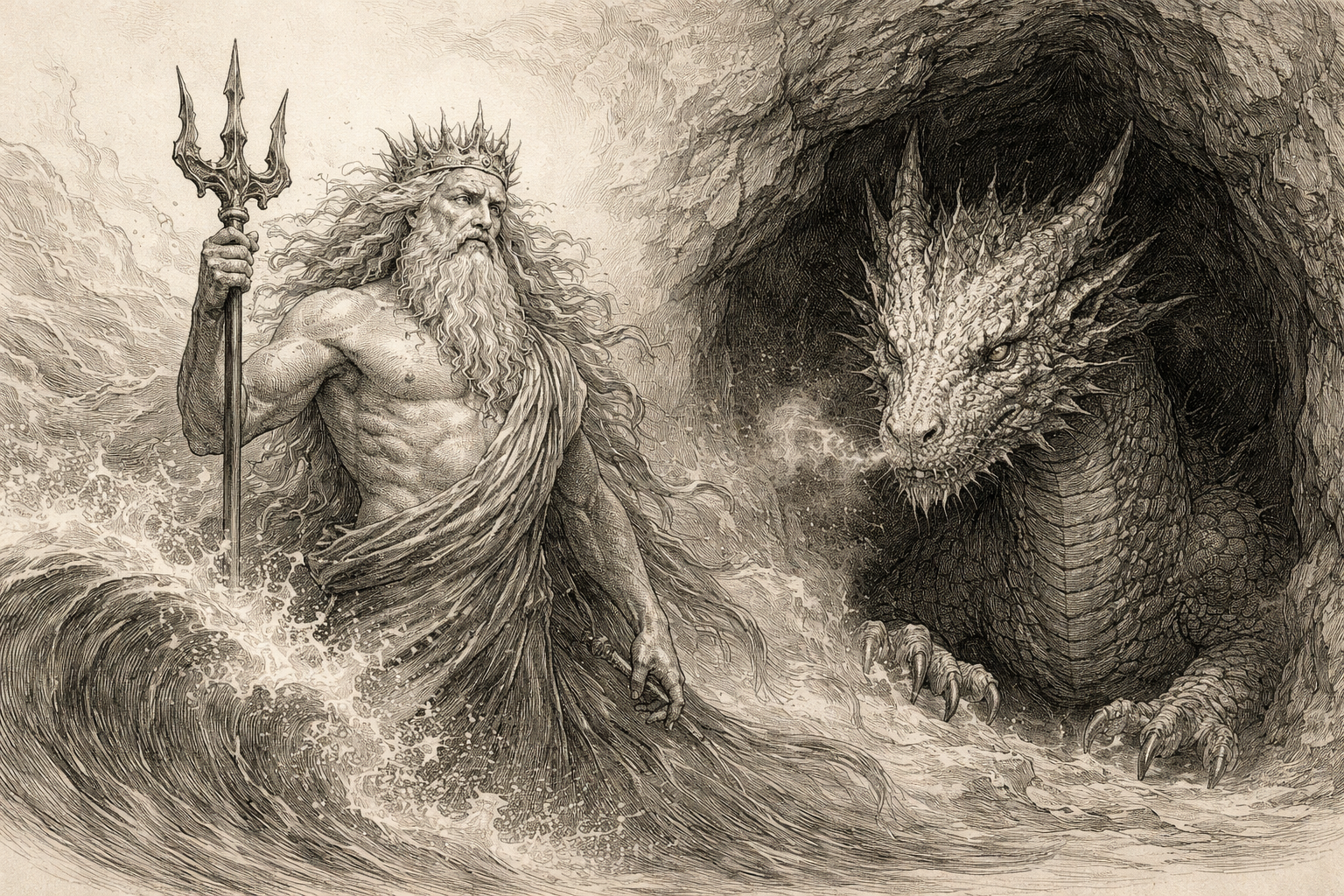
Myth not as escapism, but as orientation. As a way of mapping inner storms and hidden caverns. My own AI assisted image.
The legendary story of Captain Ahab’s obsessive pursuit of the white whale in the story, Moby-Dick: when we are determined to break the will of fate, even if it means being destroyed, can show us our folly of believing we are in total control of this world.
Myth is where humans first learned to speak in images, and these images have endured, outliving the cultures that created them.
Greek myth in particular is one of the greatest reservoirs for providing stories that become forever recognizable in literature and art across all of time.
Joseph Campbell, in his book, Hero with a Thousand Faces, encapsulates the relevancy of myth:
‘For when scrutinized in terms not of what it is but of how it functions, of how it has served mankind in the past, of how it may serve today, mythology shows itself to be as amenable as life itself to the obsessions and requirements of the individual, the race, the age.’
So, I say, go ahead and believe those fairies are communing in your back garden. The only ones telling you not to are those who lack imagination and a thirst for discovery of intrigue!