Persia Has Perished!
The past exists not to flatter or condemn us, rather to warn and enlighten us to the valuable lessons dispatched.
It is the teacher of all teachers — to deepen our understanding of the human condition.
The way for that to occur is to read the past in all of its glory, magnificence, and lament for what went wrong from those narrators of Time who know — the poets, dramatists, historians, rhetoricians, and philosophers.
The Greek poet, Aeschylus, is one of those messengers. We have in our possession, seven of his plays, out of the estimated eighty or ninety that he produced.
One of these masterpieces is The Persians. This play provides an account of the destruction of the “flower of Asia” that was the great Persian empire, from the perspective of the Persians, rather than that of the victors, the Greeks.
One of the most devastating scenes from the play is when a messenger arrives to deliver the news of Persia’s defeat. A most solemn occasion as the Queen, widow of the great Darius, and mother of Xerxes, who led the Persians to war against the Greeks, is that scene:
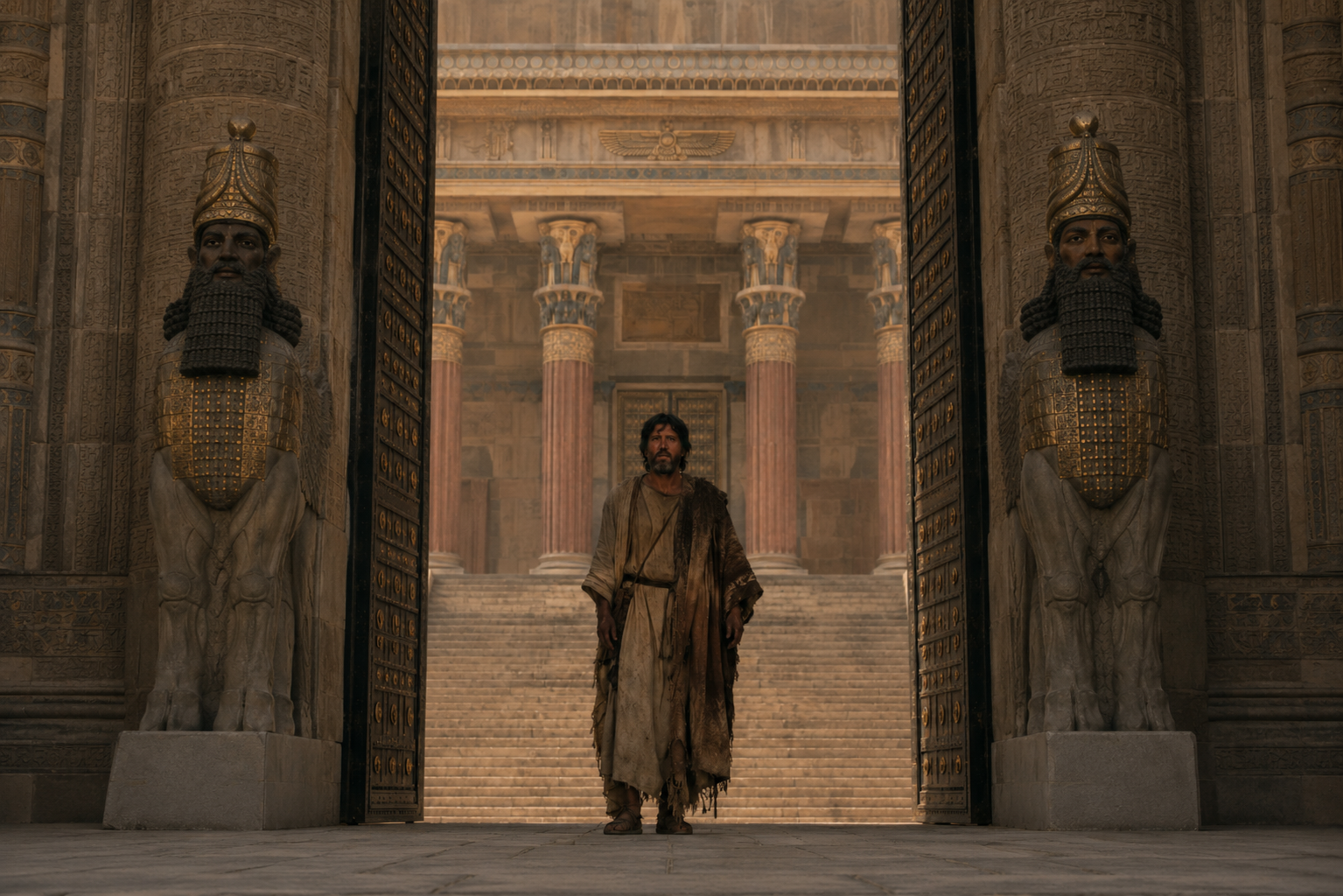
A messenger arrives with the news of Persia’s defeat following the battle of Salamis in 480 BC. Author’s own AI generated image.
‘MESSENGER: Imperial centre of vast Asia,
Land of the Persians, port and haven of wealth,
What plenitude of glory at one stroke
Is perished! Persia’s flower is fallen and gone.
Ah me!
’Tis evil even to herald evil news.
Yet, Persians, I must open all your grief.
The whole of the Asian army is destroyed.’
From our perspective here in 2026, we can only revel in the grandeur of times of old, but more importantly, in the lessons it has gifted us.
Do we dare to?