Be careful not to suffer a Beetle-Death
I often imagine the state of our world if every child were given access to a classical education. There would have been no birthing of the modern and nihilistic self-development industry.
It is hard to displace the timeless writings of Plutarch of Chaeronea in the late first century-early second century BC.
Here is a sampling of his inspiring thought from his ‘On Contentment’ Essays.
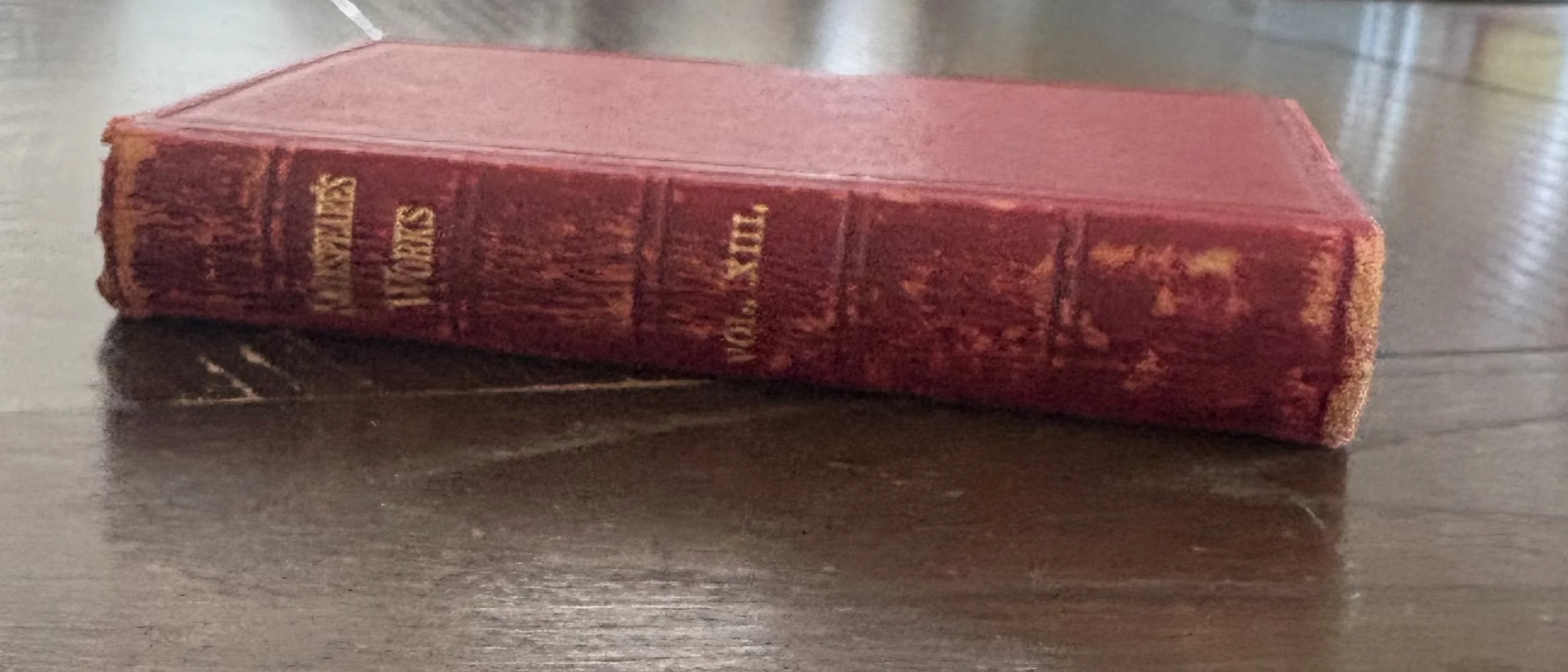
From my own collection.
SEEK GRATITUDE:
‘When you find yourself overawed by the apparent superiority of a man who is being carried in a sedan chair, make sure you look down and also see those who are keeping him off the ground.’
‘…a major impediment to contentment is the failure to keep our desires furled or unfurled, so to speak, in a way which is commensurate with the prevailing potential. Instead, we give them too much slack through our hopes, and then when we fail, we blame fate and fortune, but not our own stupidity…The chief cause is in fact self-love, which makes people ambitious and competitive whatever the situation, and makes them greedily take on everything: they not only expect to be rich, erudite, strong, outgoing, pleasant and intimate with kings and leaders of nations, but they are discontented if their dogs, horses, quails and cocks are not the best at what they do.’
DON’T AIM TO ACHIEVE EVERYTHING:
‘Anyone, however, who is upset and distressed because he is not simultaneously a lion, “mountain-reared, confident in his might,” and a little Maltese dog protected in the lap of a widow, is crazy — but no crazier than anyone who wants to be Empedocles, Plato or Democritus, writing about the universe and the way things really are…I mean, runners aren’t discontented because they don’t win the wrestling competition: they find pride and satisfaction in their own prizes. “You have obtained Sparta, so do it credit!”…And, as Solon says, “We will not exchange our virtue for their wealth, since the one is stable, but different people have money at different times.” ‘
‘Different animals have been differently equipped by nature to provide for themselves: they have not all been made carnivores or seed-peckers or root-diggers. In the same way, nature has granted a wide variety of means of living to human beings — “to shepherd, ploughman, bird-catcher and to the man whose livelihood comes from the sea.” What we should do, then, is choose what suits our specific natures, work at it and forget others’ occupations…’
In Olynthus there is a place (called “Beetle-death”) which beetles fall into and are unable to get out of: they go round and round in circles until they die there. Likewise without noticing it, people slip into recalling their bad times and are unwilling to revive or resuscitate themselves.’
ABOUT FORTUNE:
‘The point is that fortune can make us fall ill, can deprive us of our wealth, can ruin our relationship with the people or the king, but it cannot make someone who is good, brave and high-minded into a bad, cowardly, mean-spirited, petty and spiteful person, and it cannot deprive us of the permanent presence of an attitude towards life which is a more helpful guide in this sphere than a helmsman is on a sea voyage. A helmsman is incapable of quelling a rough sea or the wind, and he cannot at will happen upon a safe harbour when he needs one, and he cannot endure whatever happens confidently and without flinching: as long as he doesn’t give up, and relies on his skill, “he escapes the hell-dark sea by reefing the mainsail right down to the bottom of the mast,” but when the waves loom over him , he sits there quaking and trembling.’
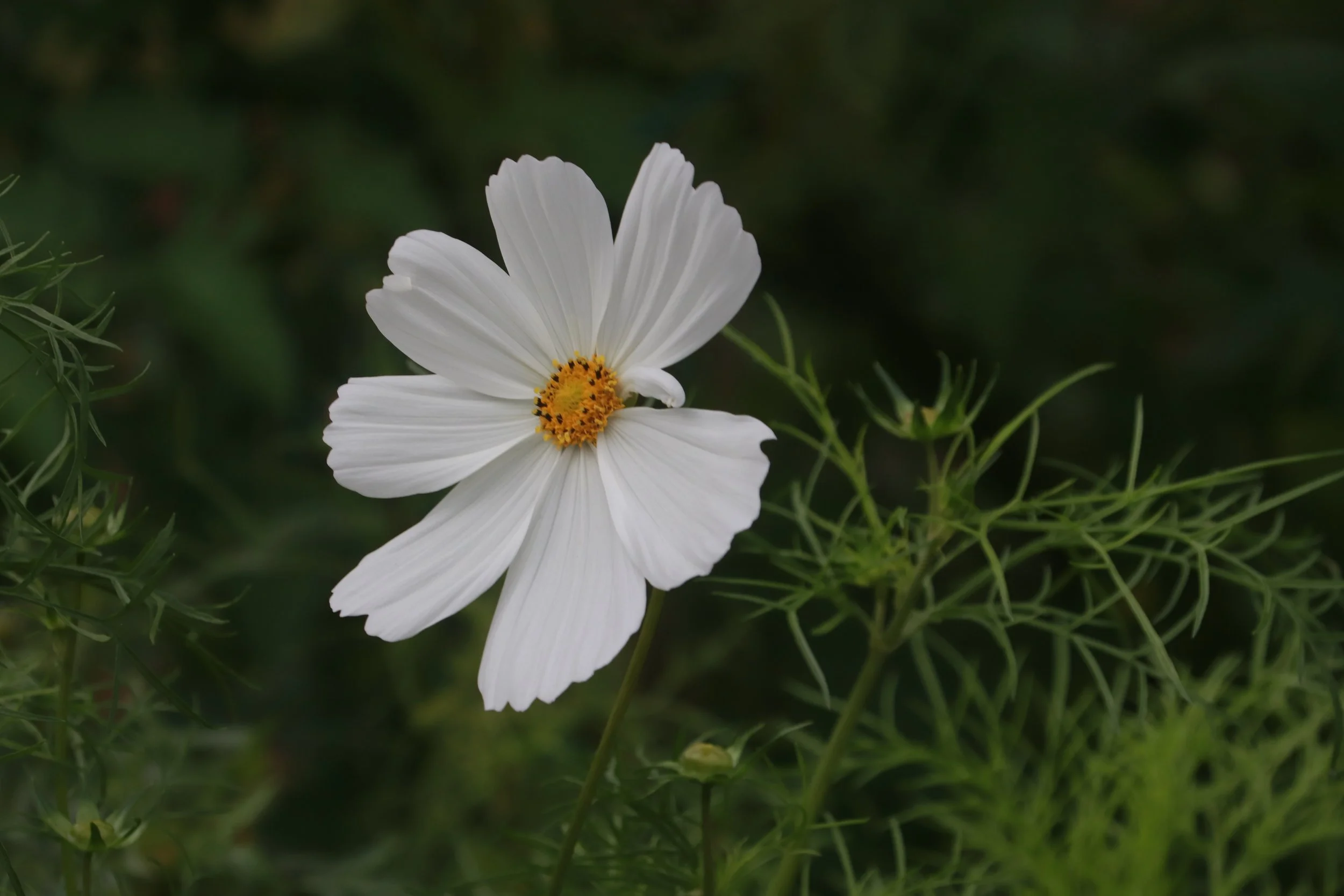
There is nothing more simple and beautiful and perfect than a flower. Image courtesy of my daughter.
‘Whoever it was that said, “Fortune, I have made a pre-emptive strike against you, and I have deprived you of every single loophole,” was not basing his confidence on bolts, locks and fortifications, but on principles and arguments which are available to anyone who wants them.’
SEE THE SIMPLE THINGS:
‘The world is a temple of the highest sacredness, and nowhere could be more suitable for divinity; and man is introduced into this world by means of his birth not to view manufactured, immobile images, but to gaze upon what Plato describes as the perceptible likenesses of intelligible things which divine intelligence has manifested as containers of an inherent principle of life and movement — the sun, moon and stars, the rivers with their continuous discharge of renewed water, and the earth with its supply of means of nourishment for plants and creatures.’
When you feel tempted to reach for yet another book to help you understand the ups and downs of this crazy world, reach for Plutarch instead of the airport self-help book.
You will not be disappointed, and you can pass it on as your legacy, because in reality, the only thing that really changes are the clothes we wear.